Daniel Lemon
|
May 05, 2026
|5.5 min read


The Drupal Dev Days Athens 2026 conference marked a pivotal shift toward agentic workflows and digital sovereignty. Key takeaways for the open source community include:
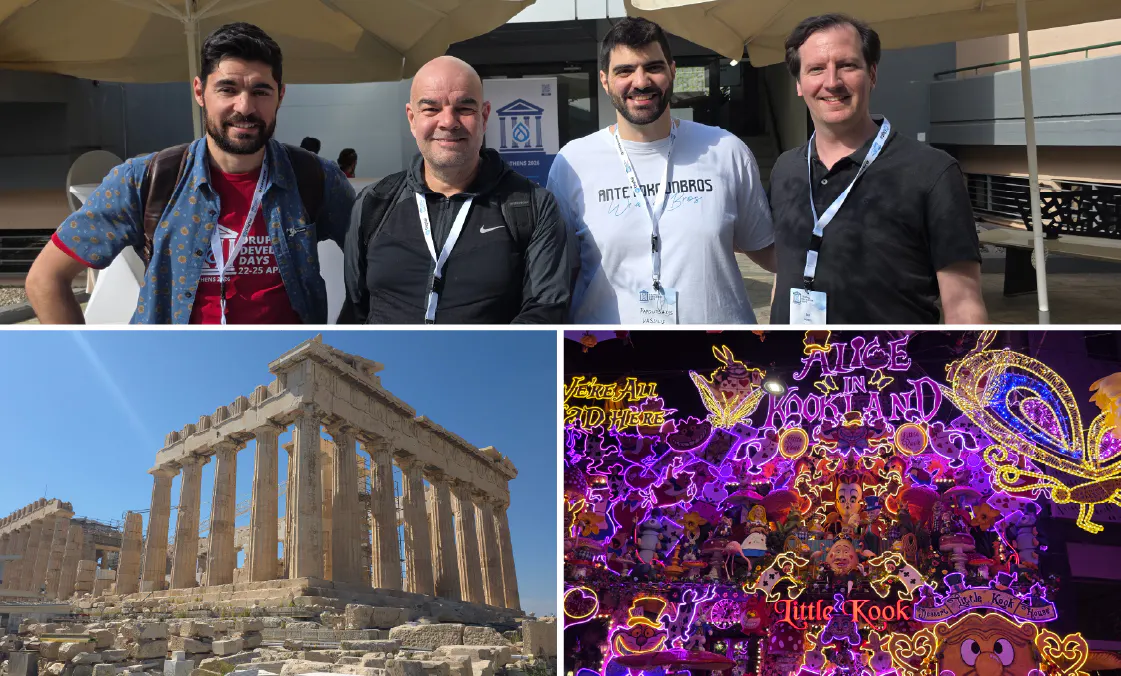
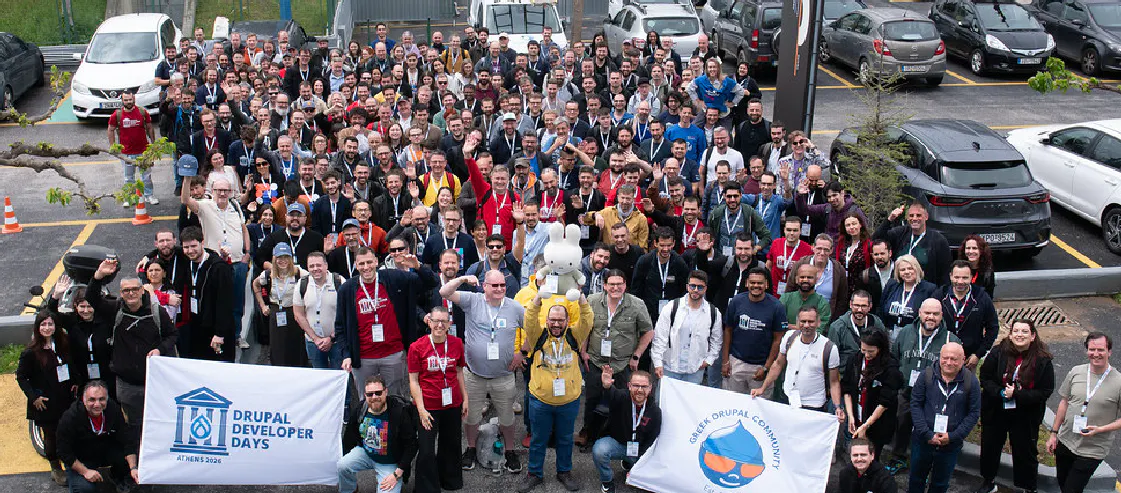
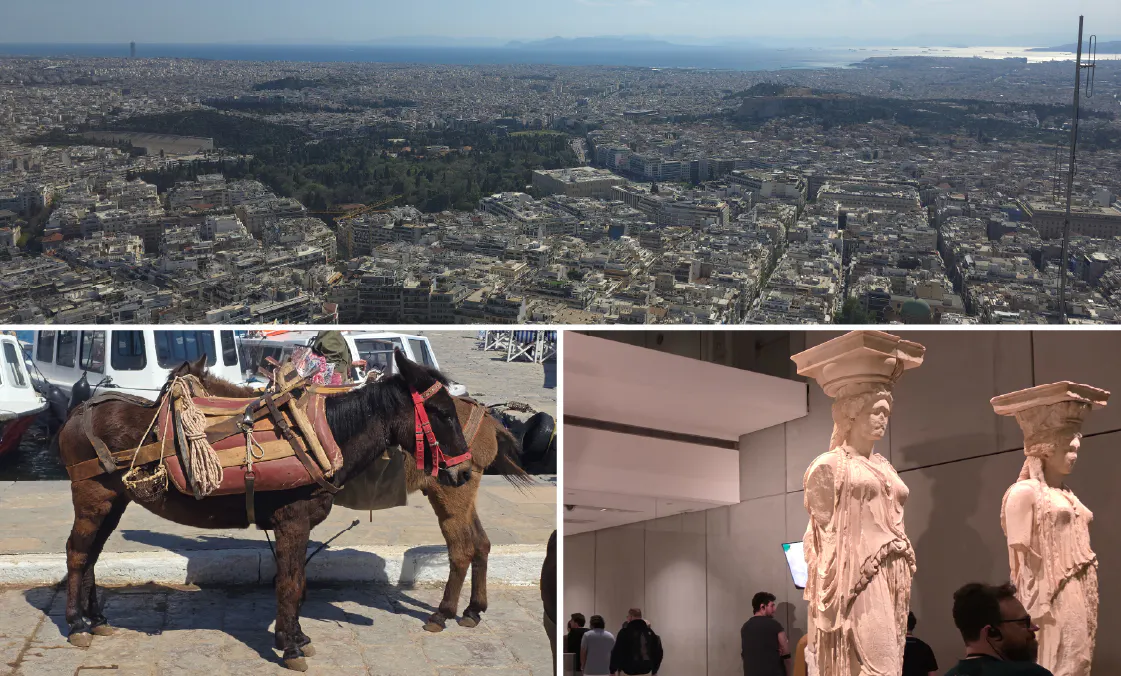
Walking through the streets of Athens before the sessions kicked off, it was impossible not to feel the weight of history and the warmth of the Greek people. That same hospitality carried directly into the venue, where the energy felt more like a gathering of old friends than a rigid tech conference. While reconnecting with community members I have known for years is always a highlight, there was something uniquely grounding about meeting the new wave of developers, those with less than a year of experience who are already looking at Drupal through a completely different lens.
Before the sessions started, we took the time to immerse ourselves in the local culture, which is inseparable from the event's atmosphere. Whether it was the shared plates of dolmadakia or the general buzz of the city, the Greek spirit of “philoxenia”, the love of strangers, was everywhere. To top things off, there was even a Greek liqueur tasting BoF (Birds of a Feather) session. Let’s just say that after sampling a few local spirits, the "community" part of "come for the code, stay for the community" felt very literal. It was the perfect way to close a week of intense learning.
Witnessing twenty students dive into the “Drupal in a Day” workshop was a powerful reminder that the ecosystem is still going strong. They weren't just learning the basics of the Drupal CMS; they were immediately putting modern tools into practice, prompting AI with our anonymous free trials from amazee.ai, to see how “canvas AI”, alt-text generation, and other features work out of the box. It is a stark contrast to the early days of Drupal, where the learning curve was a mountain; now, with AI acting as the lift that gets people to the summit much faster.
Isabel Santamaria and Fiorella Moragón Alcaraz delivered a standout session on the practical use cases of AI. It was particularly rewarding to hear them highlight amazee.ai as their Drupal AI Provider of choice, demonstrating how our infrastructure delivers a data-sovereign solution for those looking to use AI in their projects. For two people brand new to the Drupal event circuit, their ability to demonstrate how AI actually solves problems helped set the tone for the week.
Frederick Wouter’s keynote pushed the boundaries even further when he built and deployed real-time forms using his AI agents with Drupal. While he was weaving a story about ancient Greece and Dries Buytaert's history, these agents were busy in the background. The crowd was visibly impressed as people began receiving emails and texts live, all “vibe coded” by the agent during the presentation. Frederick didn't just talk about the future; he ran a live demonstration of how autonomous content frameworks can engage an audience in real-time.
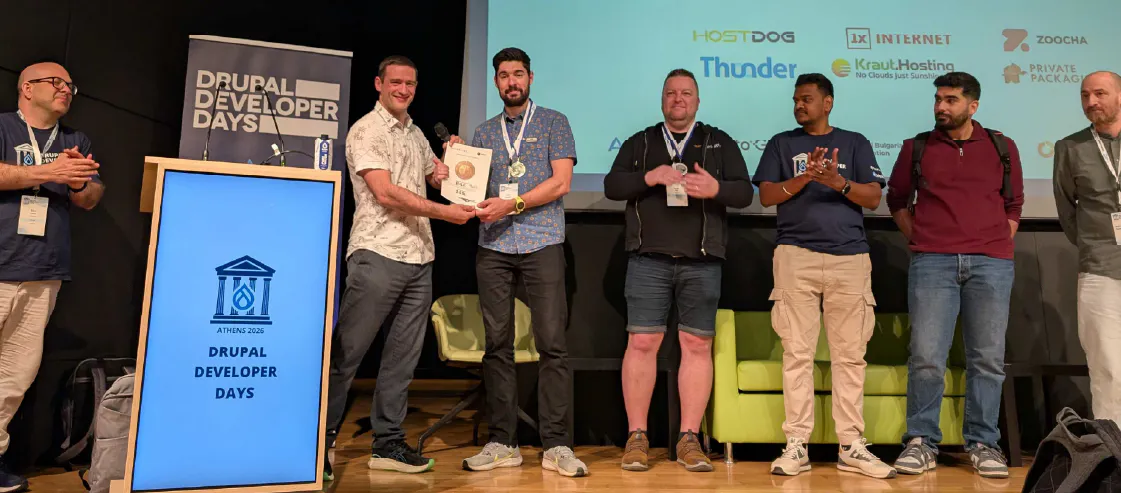
Following that energy, Frederick organized a friendly “Vibe Coding” competition, where I served as a judge alongside Marcus Johansson, Valery Lourie, and Frederick Wouter. Participants spent 2 hours building out projects, then presented their solutions to us. Bill Seremetis took home the gold with "Talos," a security tool focusing on log parsing that has the clear potential to become a real business product. Tim Diels, our silver medalist, presented a demo with a vital community use case: a tool to track whether companies are actively contributing back to Drupal. Dipak Yadev rounded out the winners with a bronze, delivering a clean presentation and a flawless live demo. Congratulations to all three! We are excited to see what they do with their amazeeClaw instances and new AI budgets!
One of the most profound takeaways came from Jürgen Haas’ keynote on the lessons learned from five years of the ECA module. He reminded us that the most critical part of the process happens before a single line of code is written. His approach to building in the open from day one is a masterclass in client relations. By framing open source as a standard part of the delivery rather than an afterthought, he explained how to eliminate the fear of proprietary loss and build a culture of shared feedback.
This human-centric focus was echoed in the fireside chat between Dries Buytaert and Professor Dimosthenis Anagnostopoulos, which touched on the vital importance of digital sovereignty. Even in a world increasingly dominated by artificial intelligence, the most valuable assets we have are our human decision-making processes and the transparency of our community. Whether we are discussing EU-branded sites or the roadmap for Drupal AI, the underlying theme is the same: technology should empower users, not lock them in.
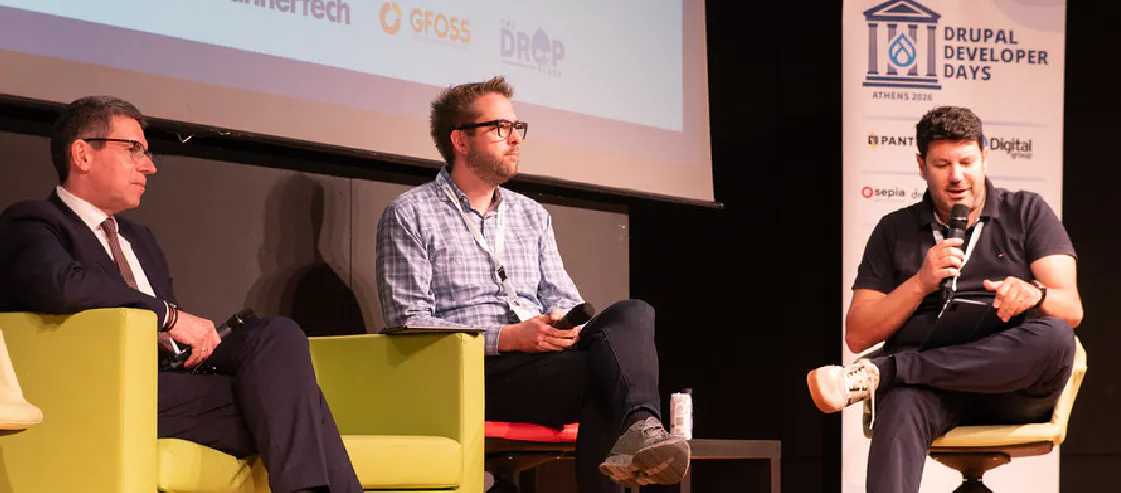
The week felt like a transition period for our community, perhaps best encapsulated by John Albin’s keynote on the intersection of emotional intelligence and AI psychology. John took us on a deep dive into the evolution of the human brain, arguing that our biology is effectively the “legacy code” that still dictates how we collaborate today. He explored how the human neocortex, the seat of complex thought and language, is constantly negotiating with our more primitive emotional systems. By understanding these psychological frameworks, John suggested we can move beyond just “prompting” AI and start building systems that actually respect human agency and emotional well-being. It was a powerful reminder that the kindness and intelligence of the Drupal community are not just cultural quirks; they are biological strengths we must leverage as we design the future of AI.
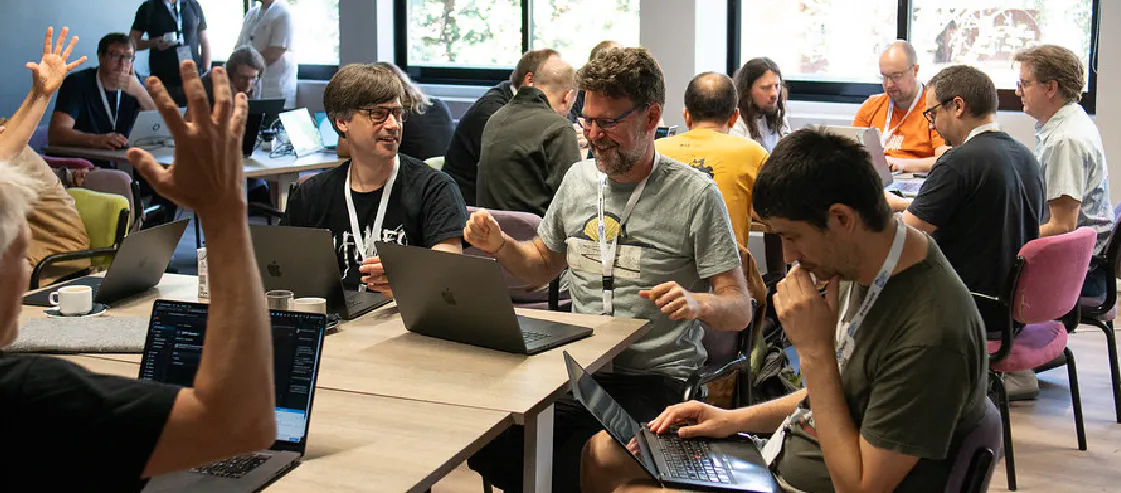
We saw this community evolution reflected across the technical sessions as well, from Mori Sugimoto’s work leveraging RAG to provide context for Japanese translations, ensuring that critical actions like “Publish” carry the correct cultural weight, to Klaus Purer’s introduction of Mago for automated code formatting and analysis. Even as the “Future Without Juniors” session addressed the shifting market, it reinforced our collective responsibility to protect the space for new talent to grow fiercely. Whether we were diving into configuration schema or streamlining LocalGov translations, the underlying thread was clear: we are building a more sophisticated, globally-aware ecosystem.
The conference ended as all the best ones do: with the simple joy of sharing a meal with friends in a friendly city. Athens reminded us that technology is just a tool. The real work is staying open, sharing early, and finding the others who want to build something that lasts. We left Greece with more than just a recap video and some slides; we left with a renewed sense of what is possible when you combine ancient hospitality with cutting-edge innovation.